July 16th, 2017
I've been thinking a lot about the intersection of the humanities and the sciences, and the intersection between humanities and medicine, specifically. Reading and writing are and always have been central components of my inner life, expression of self, and connection with the world around me. There is something remarkably powerful in storytelling and the stories we tell ourselves (about who we are and who the people around us are, for example) powerfully impact the things we think, the ways we feel, and lives we live. I have been reading a lot about narrative medicine recently, and I am looking forward to learning more...
In keeping with my previous post and with the idea of stories in medicine, I would like to share 3 more of my favorite books related to medicine with you. There are many, many more favorites I have, but after this post, I'll let literature lie for a bit :-)
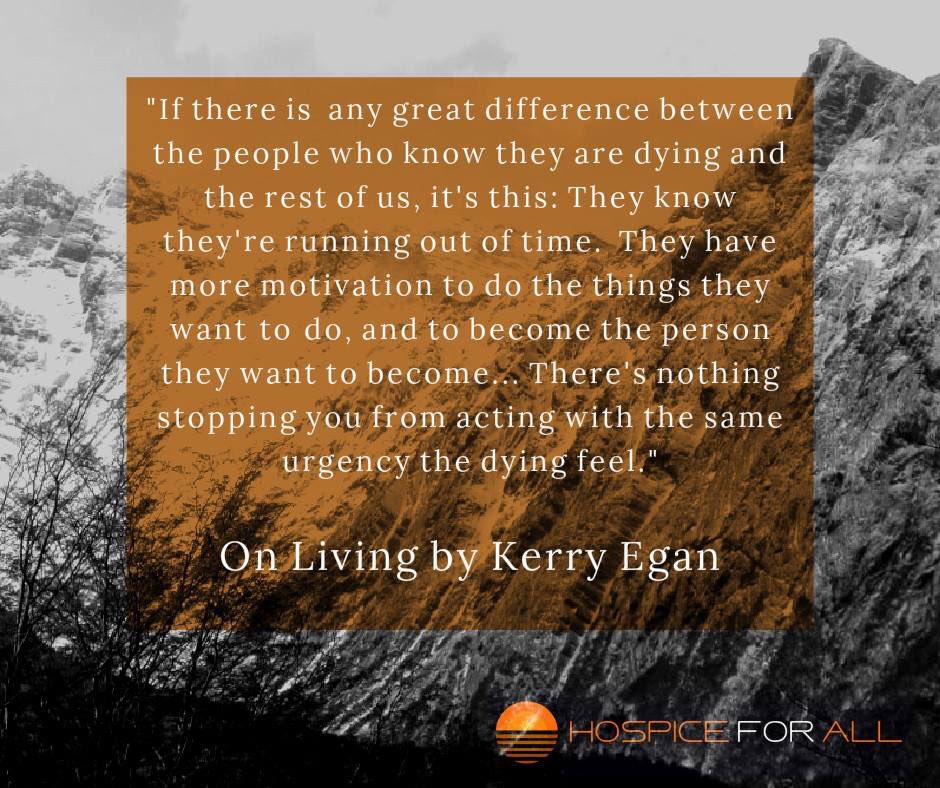
1. On Living by Kerry Egan
Hospice chaplain Kerry Egan writes not about prayers or sermons offered to the dying, but about the "spiritual work of dying" she has witnessed in her work. She reflects on what it means to find or make meaning of one's life, the experiences contained within it, and the people who have touched it: "the betrayals, wounds, unfinished business, and unrealized dreams."
Rather than advice-giving or talking, Egan mostly listened - something that doctors are notorious for not doing. In today's ever changing and somewhat tumultuous healthcare landscape, it will be interesting to see how doctors will navigate the importance of patience and time in patient care with the demands and requirements of managed care.
Though this book may not seem strictly medical in nature - it's not - it gets to the heart of medicine because it talks not of dying, but about living. It discusses all those things that make the human experience what it is that cannot be measured by a lab test or seen through an x-ray.
2. When Breath Becomes Air by Paul Kalanithi
After over a decade spent training to become a neurosurgeon, Dr. Paul Kalanithi was diagnosed with stage IV lung cancer at the age of thirty-six. Seemingly overnight, Dr. Kalanithi went from treating patients to being a patient - to being a man struggling to stay alive. In a beautifully desperate, feverish, yet disarmingly vulnerable way, Kalanithi reflects upon his life, his hopes, and what "makes a virtuous and meaningful life."
Dr. Kalanithi passed away in March 2015 while working on his book. Towards the end of the book, he observes, "I began to realize that coming face to face with my own mortality, in a sense, had changed nothing and everything."
3. The Bright Hour by Nina Riggs
To be honest with you, I still haven't finished this book. But it is too wonderful and too topical to not include in this list. In somewhat of a hybrid combination of When Breath Becomes Air and On Living, writerNina Riggs - mother of two young sons and the direct descendant of Ralph Waldo Emerson - reflects upon how to live and love with "death in the room" (she was diagnosed with terminal breast cancer at the age of thirty-seven). Riggs is both eloquent and authentic; grounded yet disarmingly funny; insightful yet humble. She writes about what it means to live each day "unattached to outcomes" and how to approach life's momentous and mundane moments with both love and honesty.
What are we to do with these faulty containers we live in?
How are we to think about all the inevitable loss, but not obsess?
What words will suffice for the last conversation we have with our children?
In the final year of her life, Riggs found particular solace in the French philosopher Montaigne's work. Montaigne's essay “That Our Desires Are Augmented by Difficulty” also held particular meaning for Emerson, who described Montaigne as tasting “every moment of the day,” including the painful ones because only pain enabled him to “feel himself and realize things; as we pinch ourselves to know we are awake.”

I've been thinking a lot about the intersection of the humanities and the sciences, and the intersection between humanities and medicine, specifically. Reading and writing are and always have been central components of my inner life, expression of self, and connection with the world around me. There is something remarkably powerful in storytelling and the stories we tell ourselves (about who we are and who the people around us are, for example) powerfully impact the things we think, the ways we feel, and lives we live. I have been reading a lot about narrative medicine recently, and I am looking forward to learning more...
In keeping with my previous post and with the idea of stories in medicine, I would like to share 3 more of my favorite books related to medicine with you. There are many, many more favorites I have, but after this post, I'll let literature lie for a bit :-)
1. On Living by Kerry Egan
Hospice chaplain Kerry Egan writes not about prayers or sermons offered to the dying, but about the "spiritual work of dying" she has witnessed in her work. She reflects on what it means to find or make meaning of one's life, the experiences contained within it, and the people who have touched it: "the betrayals, wounds, unfinished business, and unrealized dreams."
Rather than advice-giving or talking, Egan mostly listened - something that doctors are notorious for not doing. In today's ever changing and somewhat tumultuous healthcare landscape, it will be interesting to see how doctors will navigate the importance of patience and time in patient care with the demands and requirements of managed care.
Though this book may not seem strictly medical in nature - it's not - it gets to the heart of medicine because it talks not of dying, but about living. It discusses all those things that make the human experience what it is that cannot be measured by a lab test or seen through an x-ray.
“Every one of us will go through things that destroy our
inner compass and pull meaning out from under us. Everyone who does not die
young will go through some sort of spiritual crisis, where we have lost our
sense of what is right and wrong, possible and impossible, real and not real.
Never underestimate how frightening, angering, confusing, devastating it is to
be in that place. Making meaning of what is meaningless is hard work.
Soul-searching is painful.” - Kerry Egan, On Living
2. When Breath Becomes Air by Paul Kalanithi
After over a decade spent training to become a neurosurgeon, Dr. Paul Kalanithi was diagnosed with stage IV lung cancer at the age of thirty-six. Seemingly overnight, Dr. Kalanithi went from treating patients to being a patient - to being a man struggling to stay alive. In a beautifully desperate, feverish, yet disarmingly vulnerable way, Kalanithi reflects upon his life, his hopes, and what "makes a virtuous and meaningful life."
What makes life worth living in the face of death?
What do
you do when the future, no longer a ladder toward your goals in life, flattens
out into a perpetual present?
What does it mean to have a child, to nurture a
new life as another fades away?
Dr. Kalanithi passed away in March 2015 while working on his book. Towards the end of the book, he observes, "I began to realize that coming face to face with my own mortality, in a sense, had changed nothing and everything."
“There is a moment, a cusp, when the sum of gathered
experience is worn down by the details of living. We are never so wise as when
we live in this moment.” - Paul Kalanithi
3. The Bright Hour by Nina Riggs
To be honest with you, I still haven't finished this book. But it is too wonderful and too topical to not include in this list. In somewhat of a hybrid combination of When Breath Becomes Air and On Living, writerNina Riggs - mother of two young sons and the direct descendant of Ralph Waldo Emerson - reflects upon how to live and love with "death in the room" (she was diagnosed with terminal breast cancer at the age of thirty-seven). Riggs is both eloquent and authentic; grounded yet disarmingly funny; insightful yet humble. She writes about what it means to live each day "unattached to outcomes" and how to approach life's momentous and mundane moments with both love and honesty.
What are we to do with these faulty containers we live in?
How are we to think about all the inevitable loss, but not obsess?
What words will suffice for the last conversation we have with our children?
In the final year of her life, Riggs found particular solace in the French philosopher Montaigne's work. Montaigne's essay “That Our Desires Are Augmented by Difficulty” also held particular meaning for Emerson, who described Montaigne as tasting “every moment of the day,” including the painful ones because only pain enabled him to “feel himself and realize things; as we pinch ourselves to know we are awake.”
“I want all of it…all the things to do with living—and I
want them to keep feeling messy and confusing and even sometimes boring.” –
Nina Riggs
“And there it is: The beautiful, vibrant, living world goes
on.” – Nina Riggs


No comments:
Post a Comment