Saturday, September 16, 2017

Wired For Connection And Trust

September 17th, 2017


I've struggled a lot with medical school this week and I've also had a lot of medical appointments/ health issues that are going to require more of my time in the coming weeks. Even though I've felt like a ball of overwhelm and anxiety, I've also felt deeply supported. I reached out to my anatomy professor as well as the Assistant Dean of Student Affairs, and they both took the time to meet with me and reassure/ help me. The Assistant Dean of Student Affairs also connected me with a current MS2 student who struggled with both anatomy and making friends/ fitting in last year. She and I talked over the phone and then met in person (where she also introduced me to her now boyfriend), which was really nice. Finally, I also got to meet with my tutor and will be joining some of the TAs next week for practice/ quizzing in the anatomy lab before our upcoming written exam and lab practical on Friday.

All of this human contact got me thinking about the quote, "No man is an island entire of itself" (John Donne). And how true this is! I believe that as human beings, we are wired for connection. And we are likewise wired for protection. Yet these two needs often find themselves at odds as connection requires vulnerability - putting oneself out there - which can feel pretty unsafe and exposed. Likewise, both connection and protection seem like challenging needs to get met in a world that is rife with ambiguity and unpredictability. 

Perhaps contrary to expectation, I believe that trust is the way in which we can navigate these challenges and get these needs met. Understanding and practicing how to access trust and be trustworthy is an essential piece of a fulfilled life. This involves having a healthy who, what, when, where, and why of trust.

In many ways, trust is like a muscle (sorry - I've got anatomy on the brain!). I'm thinking about instances when trust quivers and trembles or won't activate or give out at the times when we need it the most. Oftentimes trust won't let go even when that's what we're telling it to do. Who, what, when, where, and why we trust is sometimes lacks reason or consciousness or calibration or consistency.

Training trust - just like with exercising most muscles in the body - is not a matter of "more is better." Rather, it necessitates working trust through its entire range - in various contexts with varying levels of resistance. It involves both "repping" and resting. It signifies that trust is not simply a mechanically isolated part of your being, but that it is part of the beautiful, conscious whole of yourself. Ultimately, to integrate and strengthen trust into one's life is to catalyze and move in support and in the direction of trusting at the right moments and in the right measures, at the right dilemmas and dimensions and in the right doses. 

In the words of Golda Meir: "Trust yourself. Create the kind of self that you will be happy to live with all your life."


Sunday, September 10, 2017

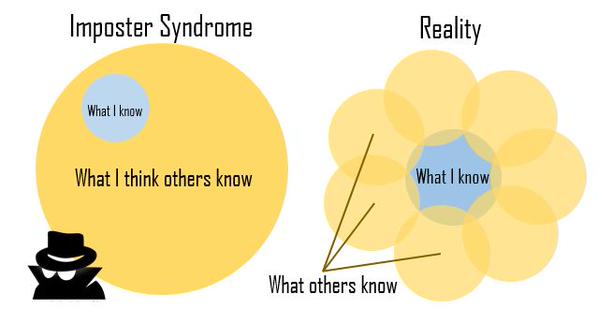
Imposter Syndrome

September 10th, 2017

I had my first written anatomy exam and lab practical this week and I did horribly. I know that they say "compare and despair," but it certainly didn't help knowing that my class average was really high. I've always done well in school and college and in my MBA, and a huge part of my identity and my sense of self has been derived from being a (good) student. The results of my exam are incredibly distressing to me in part because I feel terrified that I won't pass anatomy and in part because they completely challenge my sense of self-worth/ value as a human being.

Friends and mentors and 2nd, 3rd, and 4th year students have all told me that my complete lack of science experience/ background automatically puts me at a disadvantage and that others are also struggling a lot more than they let on, but for some reason hearing those isn't helpful because they are hard to believe. The extent of my struggle feels so monstrously immense and chaotic and overwhelming in nature that it is hard to fathom that anyone else might be in this same sinking ship.

I also think that underlying all of this is my knowing that I didn't try my best (by a far shot). My stress and anxiety levels have been crazy high, leading to my inability to focus/ concentrate. I've likewise let my perfectionism instigate procrastination and distraction. I've lacked discipline in my days and have failed to put in the requisite study time. Plain and simple.

Realistically, I know that "my best" (while maintaining sanity and some balance in my life) probably doesn't equate to getting honors in anatomy, and I wonder whether this all-or-nothing thinking has led me to some major self-sabotage the past few weeks (i.e. "if I'm not going to get honors in anatomy, I might as well just give up and not even try).

Now that we've moved into the next unit, I can see that I've continued to self-sabotage in many ways and I make excuses, when in reality I am a lot more resourceful than I'm allowing myself to be in these circumstances. I'm still worried about (not) passing anatomy, but I want to truly take the time to "reset" this week. I want to take the time to sit down with my professors, my tutor - and myself - and make a proactive plan regarding how to address this. I cannot hide and poke my head in the metaphorical sands of distraction and self-loathing and overwhelm and expect these issues to go away. I must face them head on, even if doing so requires the acceptance that one's best doesn't always (or even often) mean perfection.

The reality is that medical school has been my dreams for YEARS and CU was my top choice. I am living a dream come true. I don't want to blow this.


Sunday, September 3, 2017

On Narrative Medicine And Patient (Client) Wisdom

September 3rd, 2017

One of the things I love about my medical school campus is the fact that it emphasizes inter-professional education and collaboration. As such, there is no "School of Medicine" building, and med students take classes in the same buildings and share study spaces/ a library/ dining options/ etc. with Physicians Assistant, Physical Therapy, Pharmacy, Dentistry, Nursing, PhD, and Masters students. I really value systems approaches and integrative, holistic thinking and ways of doing things. Inter-professional education is one way in which these things are embodied.

One of the key benefits of inter-professional teamwork and collaboration is improved patient outcomes. While healthcare providers can certainly enhance patient satisfaction and health through deepening their own knowledge and repertoire of skills, we so often forget to appreciate and incorporate the wisdom of our patients into their healthcare decisions. (The word patient has a "sick person" connotation, which is why I prefer to refer to them as clients, but that is another topic for another day).

This idea of unheeded patient voices and needs reminded me of Ann Fadiman's narrative non-fiction book The Spirit Catches You and You Fall Down. It is an excellent read per se, but has particular relevance to those who work in healthcare.

The book tells the true story of the Lee family - Hmong immigrants who reside in Merced, California. The family is forced to confront and navigate the American healthcare system when their daughter, Lia, develops a severe case of epilepsy. Perhaps unsurprisingly, the system is both ignorant and intolerant of the Lee's approach to disease and healing. These contrasting Weltanschuungs result in misunderstandings and poor communication between Lia's family and her doctors that are - at the very least, in part - responsible for Lia's ultimate demise as a patient.

The book emphasizes that Lia's doctors are dedicated, compassionate, and competent individuals. However, their abilities as healers are compromised since they cannot seem to venture beyond their own formal training. By refusing to explore Lia's illness in the metaphorical context that the Lees espouse, Lia's physicians lose out on a critical chance to create a care plan that is equally acceptable to her family as it is to them.

In addition to underscoring the importance of cultural sensitivity and culturally-relevant healthcare interventions, the book highlights another critical and often overlooked issue in the clinical care process. Namely, that physicians are trained to make diagnoses and then to dispense recommendations - in other words, to behave as be-all, end-all experts and the foremost authorities concerning their patients' health.

Though I know that people will ask (and often expect) me to share my medical knowledge and expertise with them in the future, I am also aware that medicine - in the way I hope to practice it - will likely be as collaborative as it is advisory.

I am of the belief that people typically have an intuitively wise sense of what is best for them and should be trusted to act accordingly, regardless of whether they are in the role of being patients seeking medical care.

As I learn more about medicine, I am amazed by how much people already know - not in terms of medical knowledge per se (though they often possess a lot of that, too); but in terms of having an innate understanding of what their challenges and strengths are, what their health issues signify, and what the best path forward towards greater wellbeing will be.

My role as a physician is many situations will be not so much about setting the goals as it will be to provide guidance and understanding to patients as they clarity their own priorities. I will do my best to be informative, supportive, and pragmatic, but I hope to always seek to search beyond my own understanding in order to embrace subjectivity and difference. This will no doubt require intentionality from someone who will have expended a great deal of time training and committing knowledge, skills, and best practices to memory.

In the words of Gena Hamshaw:

"I believe that [medicine] is a science and that I have a responsibility to share evidence-based guidance, especially when I’m communicating publicly. But while... medicine can be categorized as [a] science, healing and self-care can’t be: they’re highly complex, personal processes that are profoundly influenced by a person’s story. This is why the field of narrative medicine is so interesting to me: it acknowledges that our subjective histories, experiences, and ways of seeing will inevitably come to bear on how we experience illness."

In other words, there is a large difference between information and advice intended for the public at large (such as recommendations in an article or fact sheet) and the one-on-one work of seeing individual patients. In addition to inquiring about a patient's symptoms, I will ask about his or her experience as well as what an improvement in health and wellbeing would look like and why. I am interested in what healing would mean or look like to them.

I would imagine that it is challenging for many physicians to strike a responsible balance between respecting a patients' experiences/ beliefs and exercising professional judgement - particularly over contentious matters where there is disagreement. And I don't really know that specific guidelines as to where that line is exist. 

I do know that I believe that my future work will involve organic, conversation-driven collaborations rather than strictly consultancy. This excites me tremendously because it means that I will learn a great deal from the patients and colleagues I work with.

I already do.


Saturday, August 26, 2017

My First Incision

August 27th, 2017

Cadaver As Doctor

My first patient
Is dead on arrival.

Face down
Gluteus maximus
Exposed
Like my own heart
With its premature ventricular contractions
Like the lessons in my life
That I seem to have skipped
About what it means to live
To Die

To be caught in the midst of
What is no longer
While I still Am
Becoming
More comfortable with something for which
Adaptation is wrong

Yet I feel myself growing numb
Desensitized
Like the prickling sensation
Of the phenols on my
Naked
Hands
That has left me insensate
To my initial dis-ease

I am now diseased
Feeling trapped conflicted confusion
Like my lungs that can’t quite seem
To fill themselves
To rid themselves from the
Feeling
That there isn’t enough air
Enough life
Enough time
To be free from the ribs that cage them within

The first cut
Is an incision into my Self
It cleaves my shame and desperation
Bringing awe and humility to the surface
As I grapple with my own discomfort
With my mortality
About Death
Per se
I find myself talking to her
Telling her my story
My fears, my doubts,
My hopes, my dreams
Asking her about hers
Waiting for the responses that are
Not heard
But felt

My first patient is my doctor.
She heals me.


Saturday, August 19, 2017

The First Week

August 20th, 2017

This past week was my first week of classes and to say that it was overwhelming would be to utter the euphemism of the century. As much as I had thought that I had mentally prepared myself for the onslaught that is the first week of medical school classes, the reality is that I was sorely underprepared and spent the better part of the week on the verge of tears that would not flow because perhaps they, too, were paralyzed and stunned from the stress.

It is hard to go from being the valedictorian in college to possibly (likely) the most clueless person in class. It is hard to go from a background of strictly business-based courses to an immersion into the hard sciences. My professors all presuppose a certain level of background knowledge (not to mention visual/ artistic skills) that I simply do not possess. Though they are all incredibly nice and patient, I am also struggling a great deal with their teaching style - which I am not at all used to and that does not complement my learning style. It is hard to sit in lecture for 6 hours a day in a dim classroom without feeling drowsy and distracted.

On top of my academic challenges, I haven't been able to study at all because of all of the late doctors appointments I've had this week (though I don't regret it, I do feel guilty about going to climb a 14er today, especially since I have a Broadway show and massage scheduled for tomorrow as well... I feel like I "ought" to be struggling and suffering and studying a lot more than I am and I feel a sense of impending doom and dread that I can't quite seem to shake). For the past few weeks, I've been feeling incredibly tired, weak, mentally fuzzy, and generally out of sorts (despite no big changes to my diet, exercise, or sleeping patterns - if anything, I am sleeping more than usual). My doctor is going to be checking my iron, B12, thyroid, etc. next week, so hopefully I will get some answers.

I am sorry that this post has been one long vent. Despite the (dis)stress I feel, I shall try to remember that I am actually living my dream - of being in medical school and of becoming a doctor. This is what I have wanted to do for over a decade. This is what I've worked so hard for and now it is actually happening! I will aim to let whatever I do today - and each day - be enough. I will strive to accept what it, let go of what was, and have faith in what will be - while taking committed, concerted action to make it a reality. For all of my angst, I shall remind myself of something I read recently:

"Happiness is the new rich,
Inner peace is the new success,
Health is the new wealth,
Kindness is the new cool."

... Except these things are hardly "new." They are simply reminders of what always was and what always will be.

In my journey to becoming the best doctor I can be, I shall remind myself (and my patients, someday!) that stress is not what happens to us. It is our response to what happens to us. And that response is something we can choose at any moment.


Sunday, August 13, 2017

The Retreat and the White Coat

August 13th, 2017


This week has been a blur of surreal events that apexed with my matriculation ceremony on Friday (or perhaps, it culminated with my climbing Quandary Peak - one of Colorado's "14ers" - yesterday, but that is another story).

On Monday and Tuesday, we had our first year (aka "MS1") retreat at the YMCA in Granby, CO (near Winter Park). In addition to a LOT of informational sessions and breakout groups, I also got to meet my anatomy group and PBL (Problem Based Learning) small group. The first night we also had a barbecue dinner and bonfire with S'mores. That afternoon we also had a bunch of "elective" activity options. I chose to do ceramics painting, indoor rock climbing, and archery. They were all a lot of fun and it turns out that I am pretty decent at shooting a bow and arrow.

Wednesday and Thursday were "First Course" days and were full, packed days replete with various lectures and small group sessions. In addition to various doctors' appointments, going to Costco, and doing groceries/ chores/ meal prep/ etc. this week, it felt like I didn't really have too much "down time" - and school hasn't even officially started yet.

If I had to summarize the main sources of my anxiety right now, I would say that they lie in 3 realms:

1. Academic

In simple terms, I am terrified about the workload and academic requirements of med school. I want to get "Honors" so badly, but at this point I am concerned that I won't even pass. I got a tutor that I will be meeting on Tuesday and printed out the slides for tomorrow, but the truth is that I haven't really looked at the material at all. The majority of my peers have taken anatomy (as well as other relevant courses) before (some even have Master's degrees in Anatomy!) and I feel like I am at such a disadvantage. I really want to be able to get into the residency of my choice...

2. Social/ Relationships

I don't have social anxiety, but I really want to fit in, make friends, and feel like I belong. It seems as though most people have already settled into their friend groups and virtually everybody knew other people from before. I still feel awkward - like I am on the fringes looking in - and I really hope that I will be able to form some really strong and lasting friendships in medical school (perhaps even dating?).

3. Stress Management/ Health

Given that stress is par for the course at medical school, I need to figure out ways in which to manage the acute overwhelm I have felt since school "started" (classes technically start tomorrow) in ways that do not damage my health, well-being, or sense of balance in my life. There is so, so much more I could write about this topic, but I will leave it at this for now.


I've been trying not to "future trip" too much - to take things one day at a time and not to get caught up in the "what if's" or "should've/ would've/ could've's" but its hard to not look around at those around me and to remember that comparison really is the thief of joy (I'm reminded of the old adage "compare and despair").

For now, I will try to remember to take things as they come and to pull myself back into the present moment when I notice that my attention and energies are elsewhere. It is time for me to translate and carry forward my daily mindfulness meditations into the "eyes open" state.


Sunday, August 6, 2017

Day 1

August 7th, 2017


Medical school started on Friday.

It was surreal and still feels surreal. I have so many thoughts and feelings about it that there is no real way to start writing about them because I am still in that impenetrable state of being.

Friday was a long and exhilarating day that started before 8am and didn't end until after 8pm. After checking in and following up with immunizations at 8am, we had our Advisory College Program breakfasts and bonding/ game time until 9:45am. Advisory Colleges at CU are kind of like the various colleges they have within Universities such as Oxford or Campbridge (or, more fittingly, like the different houses in Harry Potter). Each of CU Medical School's 8 Advisory Colleges is named after 8 (out of 58 total) Colorado "14ers" (mountains above 14,000 feet). I am in Crestone and our college mascot is the Wolf. Everyone in my college that I've met thus far is really friendly and down to Earth.

After breakfast, there was a Welcome & Overview, "TED Talks," and a Financial Aid presentation before lunch outdoors on the lawn with faculty. After lunch, we had a Technology presentation, Curriculum Overview, a more in-depth curriculum presentation, a "What to Expect in the First Few Weeks" seminar, Student Resources seminar, and a video/ Closing Remarks. I certainly experienced information overload and though I probably missed several "relevant" matters that were brought up, there were some messages that were echoed throughout the day that really stuck with me and that instilled my belief and confidence in the fact that the CU School of Medicine was the right choice for me and that I belong.

The first idea that was brought up was that of "imposter syndrome." We were reassured that every single one of us experienced it. That was helpful to hear and made me feel less alone, particularly because academic worries are one of my top three causes of anxiety right now. The other two key sources of anxiety are the social aspect of med school and the ability to manage stress/ maintain balance & health... but perhaps those anxieties are best saved for another post.

In regards to imposter syndrome, the following comments were made:

"There should be no question in your mind: You are supposed to be here."

and

"You do belong here. You are good enough. You can do it. You will do it."

Another major idea that was emphasized was the idea of compassion, and more specifically, self-compassion. Compassion was described as a vector, meaning that it has both direction and amplitude. We were encouraged to feel all of our emotions and to notice that they are there - to be present with them. We were told that none of us would be here if we didn't extend deep compassion outwards to the world.

"In med school, you must turn that vector in the direction of yourself, as well. You must have self-compassion in order to succeed and you must allow yourself to succeed... Ask mom or your S.O. to send you a text every couple of days saying, 'I love you. You can do this.'... Ask for help and receive it. Allow others to help and support you. You are never alone."

After the informational part of the day was over, we had Advisory College dinners from 6 to 8pm. Our college's dinner was hosted in a 4th year students' house and there was delicious Indian food catered in and it was a great time to relax and connect and meet some others in the college.

It was a tiring but incredible day. Tomorrow, we have our first year retreat in Winter Park, where I am looking forward to meeting more people in my class as well as some 2nd year students (including my "buddy").

I feel so grateful and my heart is full.